Central Heating
Powerflush Guide — What It Is and When You Need One
Reviewed by our Gas Safe registered engineers · Last updated 22 July 2026
A powerflush clears the black sludge that builds up inside a heating system and stops it working properly. Here’s what actually happens during one, the signs you need it, how it compares to a cheaper chemical flush, and what it costs. If you would rather just book, see our North London powerflushing service.
Gas Safe 918817 North London specialists Upfront pricing
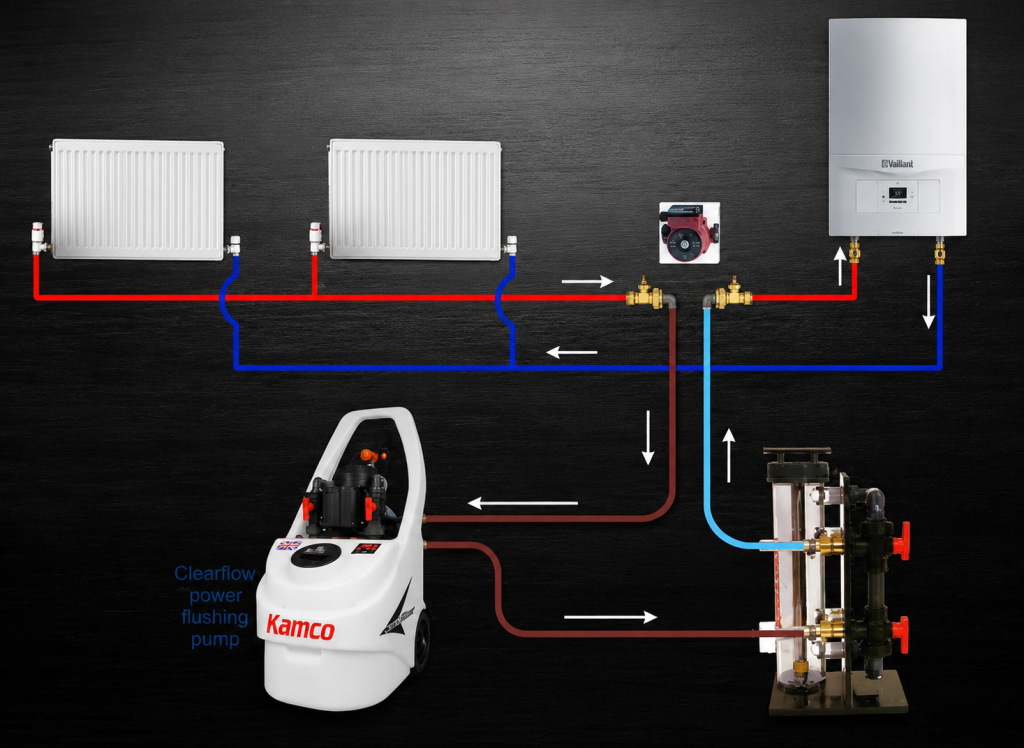
Quick answer: A powerflush pumps water and cleaning chemicals through your radiators and pipework at high flow to shift the rust and sludge (magnetite) that collects over the years. You typically need one if radiators are cold at the bottom, the boiler is kettling or noisy, water from a bled radiator runs black, or the system is slow to warm up. It usually takes most of a day and finishes with a fresh dose of inhibitor.
Already know you need one? See our powerflushing service in North London.
The Signs
Signs you may need a powerflush
One or two of these can point to sludge; several together usually means it’s time. We confirm with a magnetic test of the system water before recommending a flush.
| The sign | What it points to |
|---|---|
| Radiators cold at the bottom | Sludge settling in the base of the radiator |
| Water runs black when you bleed a radiator | Magnetite (rust) built up through the system |
| Boiler banging or kettling | Sludge insulating the heat exchanger |
| Some radiators never get hot | Flow blocked by debris |
| System slow to warm up | Circulation restricted throughout the loop |
| Repeated pump or valve failures | Debris wearing out the moving parts |
The Process
What happens during a powerflush
- We connect a flushing pump to the system and circulate a cleaning chemical
- Each radiator is worked in turn, with a magnet and agitation to lift the sludge
- The dirty water is flushed out to drain and the system refilled with clean water
- A fresh dose of corrosion inhibitor goes in to slow it building up again
- We check flow and temperatures across every radiator before finishing
Compare
Powerflush vs chemical flush
Powerflush
A vigorous, whole-system clean using a high-flow pump. Best when sludge is well established — cold-spot radiators, kettling, black water. It takes most of a day and gives the most thorough result.
Chemical flush
A cleaner is added and circulated by your own pump for a period, then drained. Cheaper and quicker, and fine as prevention or for light sludging — but it won’t shift heavy build-up the way a powerflush does.
Engineer Insight
When it’s worth it — and when it isn’t
A powerflush is worth it when sludge is genuinely the problem — and a magnet on the system water tells us that fast. What it isn’t is a cure for every cold radiator; if the issue is trapped air, a stuck valve, or balancing, a flush won’t help and we’ll say so. Where we do flush, fitting a magnetic filter afterwards catches new debris and protects the boiler — it’s the single best add-on for keeping a system clean.
Costs
What a flush typically costs
Typical North London guide prices — you’ll always get an upfront quote before any work starts.
FAQs
Powerflushing — your questions answered
What is a powerflush?
A deep clean of your central heating that pumps water and chemicals through at high flow to remove the rust and sludge (magnetite) that builds up over years and blocks radiators and the boiler.
How do I know if I need a powerflush?
Common signs are radiators cold at the bottom, black water when you bleed them, a boiler that bangs or kettles, some radiators never heating, and a system slow to warm up. We confirm with a magnetic test of the system water.
How long does a powerflush take?
Usually most of a day for an average home, longer for bigger systems or heavy sludging. We finish by dosing the system with fresh inhibitor to slow it happening again.
Powerflush or chemical flush — which do I need?
A chemical flush is cheaper and fine for light sludging or as prevention. A powerflush is more thorough and the right choice once sludge is established and radiators are already suffering.
Will a powerflush fix my cold radiators?
Only if sludge is the cause. If a radiator is cold because of trapped air, a stuck valve, or poor balancing, a flush won’t help — so we always diagnose first rather than flush by default.
Related
Related guides
See where sludge collects in the loop.
Read guideCentral HeatingCentral Heating Pump GuideSludge is hard on the circulating pump.
Read guideRadiatorsRadiator Cold at the BottomThe classic sign of sludge in a radiator.
Read guideBoiler ProblemsBoiler Making NoiseKettling and what causes it.
Read guideMaintenanceSigns Your Boiler Needs ServicingCatch sludge before it spreads.
Read guideLeaksBoiler Leaking WaterInhibitor slows the corrosion behind leaks.
Read guideBrowse all Central Heating guides, or head back to the Help & Advice Centre.
Sludgy system? Let’s flush it out.
Book a powerflush or a system health-check with a Gas Safe engineer, or call — we’ll tell you honestly whether a flush is what you actually need. North London, upfront pricing.
Gas Safe Registered 918817 | North London specialists | Upfront pricing