
Heating Problems
Central Heating Problems: How To Work Out What's Actually Wrong
Written & reviewed by our Gas Safe registered engineers · Last updated 22 July 2026
When central heating stops working properly, the fault is rarely just ‘the boiler’s broken’ — more often it’s trapped air, a stuck valve, a failing pump, or a system that was never balanced. These guides cover heating faults specifically: uneven radiators, rooms that never warm up, short-cycling, and heat in some rooms but not others.
Gas Safe 918817 North London specialists Same-day callouts
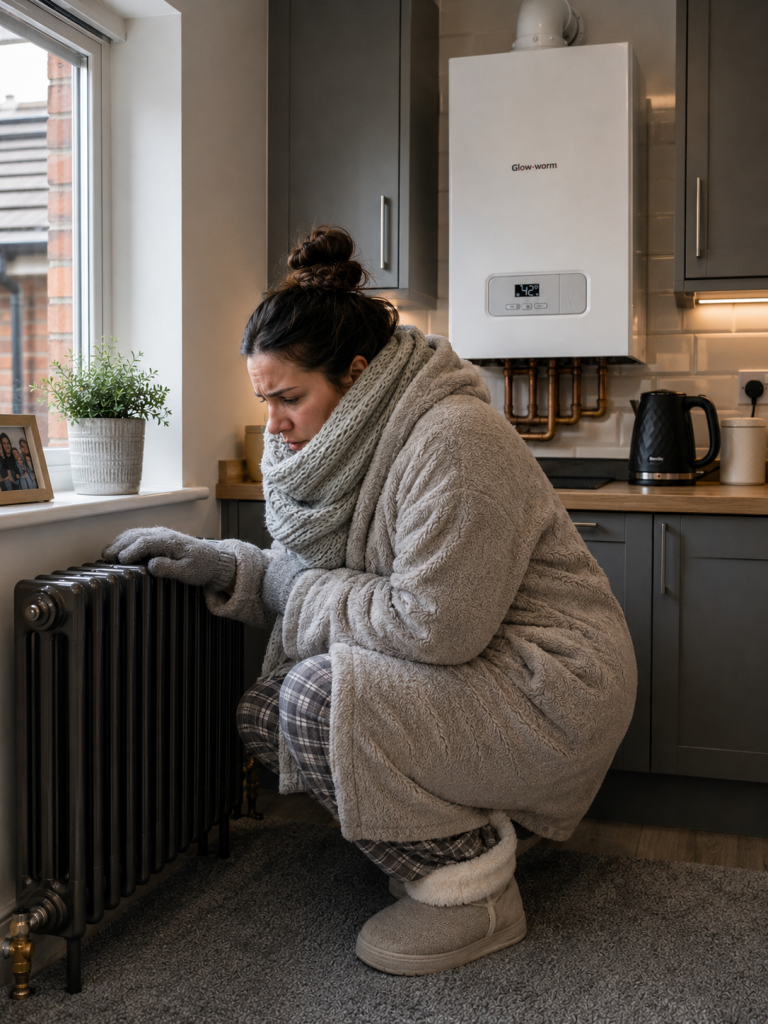
Quick answer: if your boiler fires up and shows no fault code but your heating still isn’t working properly, the problem is almost always somewhere in the system — radiators, pump, valves or controls — rather than the boiler unit itself.
Common Symptoms
Six patterns we see most often
No Heat At All
Boiler fires up but radiators stay stone cold, or the system won't fire at all.
Heating On, House Still Cold
Radiators feel warm to the touch but the rooms never actually heat up.
Some Radiators Cold
One or two radiators stay cold while the rest of the house warms fine.
Heating Short-Cycles
The system fires up and cuts out again within minutes, on repeat.
Noisy System
Banging, gurgling, kettling or whistling from the boiler or the pipework.
Uneven Heat By Floor
Upstairs warms fine but downstairs doesn't, or the other way round.
Common Mistakes
Where homeowners go wrong before calling us
- Bleeding radiators repeatedly without ever checking or topping up system pressure afterwards, which quietly starves the system of water.
- Turning the thermostat up higher when the real issue is a stuck zone valve or failed pump, not a lack of heat being generated.
- Ignoring a noisy system for months as cosmetic, when banging or kettling is often limescale or sludge building around the heat exchanger.
- Booking a powerflush as an automatic fix-all before anyone has diagnosed whether sludge is actually the cause.
- Resetting the boiler repeatedly because it briefly brings the radiators back — this usually masks a developing fault rather than fixing it.
When To Call An Engineer
When it's worth booking someone in
Book an engineer straight away if you notice banging or gurgling alongside falling system pressure, any burning or unusual smell near the boiler, no heat overnight in freezing weather where there are children, elderly or vulnerable residents, or the same fault returning within days of a DIY fix. These aren’t things to sit on.
A real example from Crouch End
Last winter a customer in Crouch End had been bleeding her upstairs radiators every few days for over a month just to keep the bedrooms warm. Each time it worked for a day or two, then the same radiators went cold. The actual cause was a failed diverter valve sending hot water preferentially to the cylinder rather than the heating circuit — bleeding treated a symptom that came straight back while the valve never got fixed. One visit, correctly diagnosed, solved what a month of bleeding hadn’t.
What Repairs Typically Cost
Typical heating problem repair costs
See our powerflushing service for sludge-related faults. You’ll always get an upfront quote before any work starts.
FAQs
Heating problems — your questions answered
Why is only one radiator not heating up while the rest of the house is fine?
Usually trapped air, a closed or seized lockshield valve, or sludge settled at the bottom of that specific radiator. Bleeding it is worth trying first; if it stays cold at the bottom after bleeding, that points to sludge rather than air.
My heating comes on but the house never gets properly warm — what's wrong?
Often a system that’s never been balanced, so water isn’t distributing correctly between radiators, or a boiler undersized or de-rated for the property. It can also be a flow temperature set too low on a modern condensing boiler.
Why does my heating switch itself off after a few minutes of running?
Known as short-cycling, this is commonly caused by low system water pressure, a faulty thermostat sending the wrong signal, or the boiler overheating internally due to restricted flow — often from sludge.
Is a noisy heating system dangerous or just annoying?
Not usually dangerous in itself, but it’s a warning sign. Kettling (a rumbling, kettle-like noise) means limescale or sludge is restricting water flow around the heat exchanger, and left unaddressed it accelerates wear and can eventually cause a leak or breakdown.
Why is the top of my radiator cold but the bottom hot, or the other way round?
Cold at the top with hot at the bottom is trapped air — bleed the radiator. Cold at the bottom with hot at the top is the opposite: sludge has settled in the bottom and needs a powerflush or chemical clean rather than bleeding.
Can central heating problems affect my hot water too?
On a system or regular boiler sharing a cylinder, yes — a faulty diverter or motorised valve can affect both. On a combi the two are more independent, so a heating fault is less likely to touch your hot water.
Why does my heating work fine downstairs but not upstairs?
Often pump or pressure related, since upstairs radiators need more force to fill properly. It can also mean upstairs zone valves have failed or the system was never balanced to push water high enough after work on the property.
How do I know if a heating problem is my thermostat rather than the boiler?
Compare the temperature the thermostat reports against a separate room thermometer. If they disagree significantly, or the heating won’t respond at all to changes on the thermostat, that points to the thermostat or its wiring rather than the boiler.
Does an old heating system just get worse over time, or can problems be fixed for good?
Most heating faults are fixable properly rather than something to manage indefinitely — the exception is a system so old or corroded that repairs become a rolling list of failures, at which point replacement genuinely works out cheaper than repeated call-outs.
If bleeding a radiator only fixes it for a few days, what does that mean?
Recurring air even after bleeding usually means air is being drawn into the system somewhere — commonly a failing automatic air vent, a slow leak, or a faulty expansion vessel not holding pressure. If it recurs within days rather than months, it’s worth having the underlying cause diagnosed rather than bleeding indefinitely.
Related
Related guides and services
The whole system down, step by step.
Read guideHeatingThermostat ProblemsWhen the controls are the culprit.
Read guideHeatingNo Heating In WinterWhat to do when it fails in the cold.
Read guideRadiatorsRadiatorsBleeding, balancing and cold spots.
Read guidesPressurePressure ProblemsPressure dropping or climbing too high.
Read guidesBoiler ProblemsBoiler ProblemsWhen the fault is the boiler itself.
Read guidesPersistent sludge issues are usually resolved with powerflushing, and regular annual servicing catches many of these faults early. We attend heating faults across Hackney, Barnet and Finchley, plus the rest of our coverage area.
Still not sure what's wrong?
Describe the symptoms and we’ll tell you honestly whether it’s a quick fix or worth booking an engineer. Gas Safe registered, North London, upfront pricing.
Gas Safe Registered 918817 | North London specialists | Upfront pricing