
Central Heating
Central Heating Pump Guide — Signs of a Failing Pump
Reviewed by our Gas Safe registered engineers · Last updated 22 July 2026
The circulating pump is what actually moves hot water round your home. When it starts to fail you get cold radiators, odd noises, or heat that spreads slowly. Here’s how to spot a failing pump, what you can safely check, and what a replacement costs.
Gas Safe 918817 North London specialists Upfront pricing
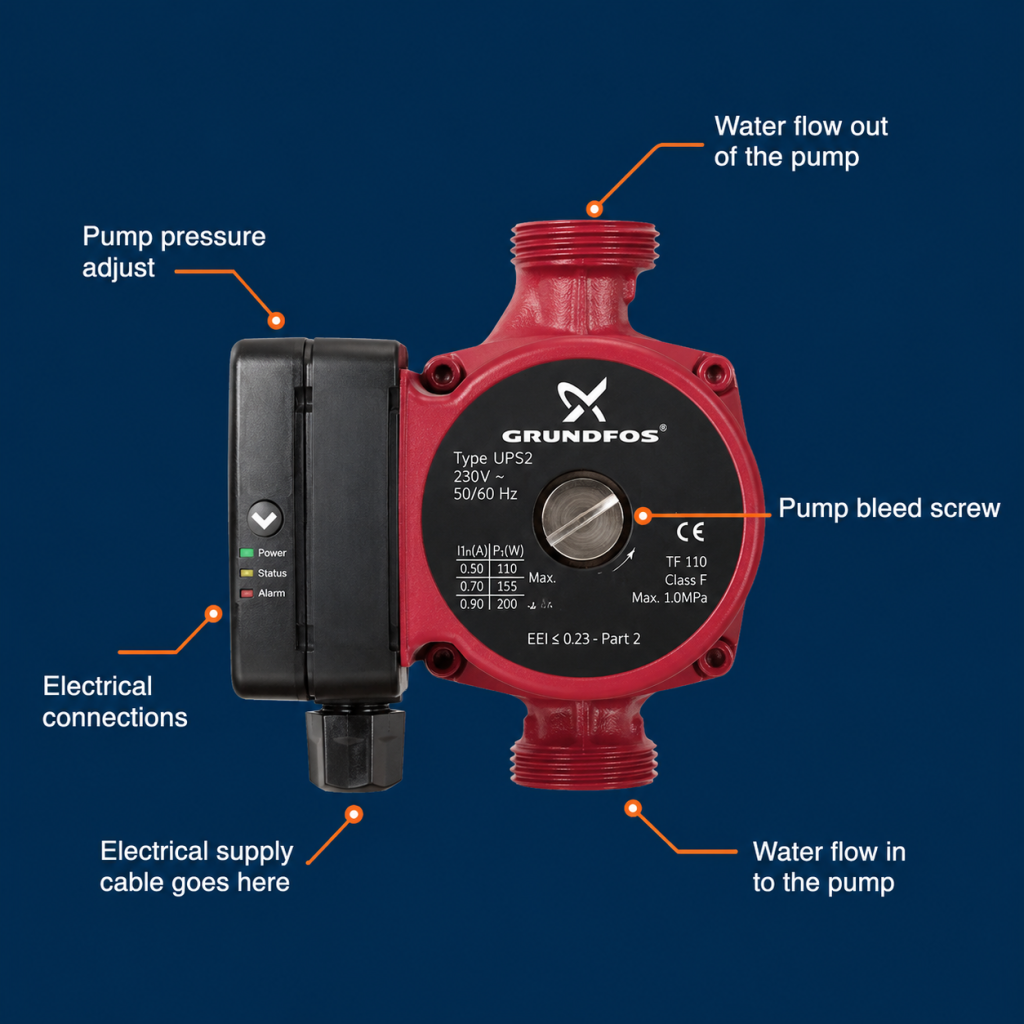
Quick answer: The pump pushes heated water from the boiler around your radiators. If it’s failing you’ll often notice radiators staying cold while the boiler is hot, a humming or vibrating noise, or the pump body being hot with no flow. Carefully feel the pump with the heating on — warm and lightly vibrating is normal; silent and cold, or hot and noisy, both point to a pump on its way out. Bleeding the pump’s air screw can free an airlocked pump; a seized or leaking one needs replacing.
Diagnose
Pump symptoms — and what they mean
Match what the pump is doing to the likely cause. The colour on the left shows what’s safe to try yourself and what needs an engineer.
| The symptom | Likely cause | What to do |
|---|---|---|
| Radiators cold, boiler hot | Pump not circulating | Check the pump is running and bleed its air screw to clear an airlock |
| Humming but no water movement | Seized or airlocked pump | Bleed the air screw; if still seized, an engineer will free or replace it |
| Noisy or vibrating loudly | Worn bearings or trapped air | Bleed the air first; an engineer can replace a worn pump |
| Leaking from the pump body | Failed pump seal | An engineer will replace the pump |
| Pump hot to the touch | Overrunning or blocked by sludge | Turn the heating off and call us; a powerflush may be needed |
| Won’t run at all | Electrical fault or dead pump | An engineer will test the supply and replace the pump if needed |
First Steps
What you can check yourself
Safe to do
- Check the pump has power and isn’t set to its lowest speed by mistake
- Feel the pump with the heating on — warm and lightly vibrating is normal
- Bleed the air screw on the pump body to clear an airlock (have a towel ready)
- Check the isolation valves either side of the pump are fully open
Stop and call us if…
- The pump is leaking from the body or the unions
- It’s hot to the touch, buzzing, or tripping the electrics
- It won’t run at all, or runs but nothing circulates after bleeding
- The water coming out when you bleed it is thick and black (sludge)
Engineer Insight
What we usually find
Most pump call-outs are one of three things: an airlock (a two-minute fix with the bleed screw), a pump seized after sitting idle over summer (a tap and a bleed often frees it), or bearings worn out after years of sludge (that one needs a new pump). Modern pumps have speed settings — too low and distant radiators stay cool, too high and you get noise, so we set it to match your system. If sludge killed the last pump, a powerflush and a magnetic filter stop it happening to the next one.
Costs
What pump work typically costs
Typical North London guide prices — you’ll always get an upfront quote before any work starts.
FAQs
Central heating pumps — your questions answered
How do I know if my central heating pump is failing?
Common signs are radiators staying cold while the boiler is hot, a humming or vibrating noise, the pump leaking, or it being hot to the touch. Feel the pump with the heating on — it should be warm and gently vibrating, not silent or rattling.
Can I fix a central heating pump myself?
You can safely bleed the air screw to clear an airlock and check the pump’s speed setting and isolation valves. Replacing a pump involves draining and electrical work, so a leaking, seized, or dead pump is a job for an engineer.
How long does a central heating pump last?
Typically 10–15 years. Sludge shortens that a lot, which is why keeping the system dosed with inhibitor and fitting a magnetic filter helps the pump last longer.
Why is my pump running but the radiators are cold?
Usually an airlock, or a pump that’s spinning but not moving water because it’s seized internally. Bleed the air screw first; if the radiators stay cold, the pump likely needs replacing.
What speed should my central heating pump be set to?
It depends on the system size and layout — most homes run on the middle setting. Too low and far radiators stay cool; too high and it gets noisy. We set it correctly when we service or replace it.
Related
Related guides
Sludge is the pump’s biggest enemy.
Read guideCentral HeatingHow Central Heating WorksWhere the pump sits in the loop.
Read guideHeatingRadiators Cold but Boiler WorkingA failing pump is a common cause.
Read guideBoiler ProblemsBoiler Making NoiseTell kettling apart from pump noise.
Read guideHeatingCentral Heating Not WorkingWhen nothing heats up at all.
Read guidePressureBoiler Losing PressureRule pressure out before blaming the pump.
Read guideBrowse all Central Heating guides, or head back to the Help & Advice Centre.
Pump playing up? We’ll sort it.
Book a Gas Safe engineer to test, free, or replace the pump, or call — we carry common pumps and cover North London with upfront pricing.
Gas Safe Registered 918817 | North London specialists | Upfront pricing