
Pressure Problems
Boiler Pressure Too High? Causes and How To Lower It
Reviewed by our Gas Safe registered engineers · Last updated 21 July 2026
A gauge in the red zone is usually just an overfill — easily sorted by bleeding a little water out. But if pressure climbs on its own, the expansion vessel is the likely culprit. Here’s how to tell, and how to bring it down safely.
Gas Safe 918817 North London specialists Upfront pricing
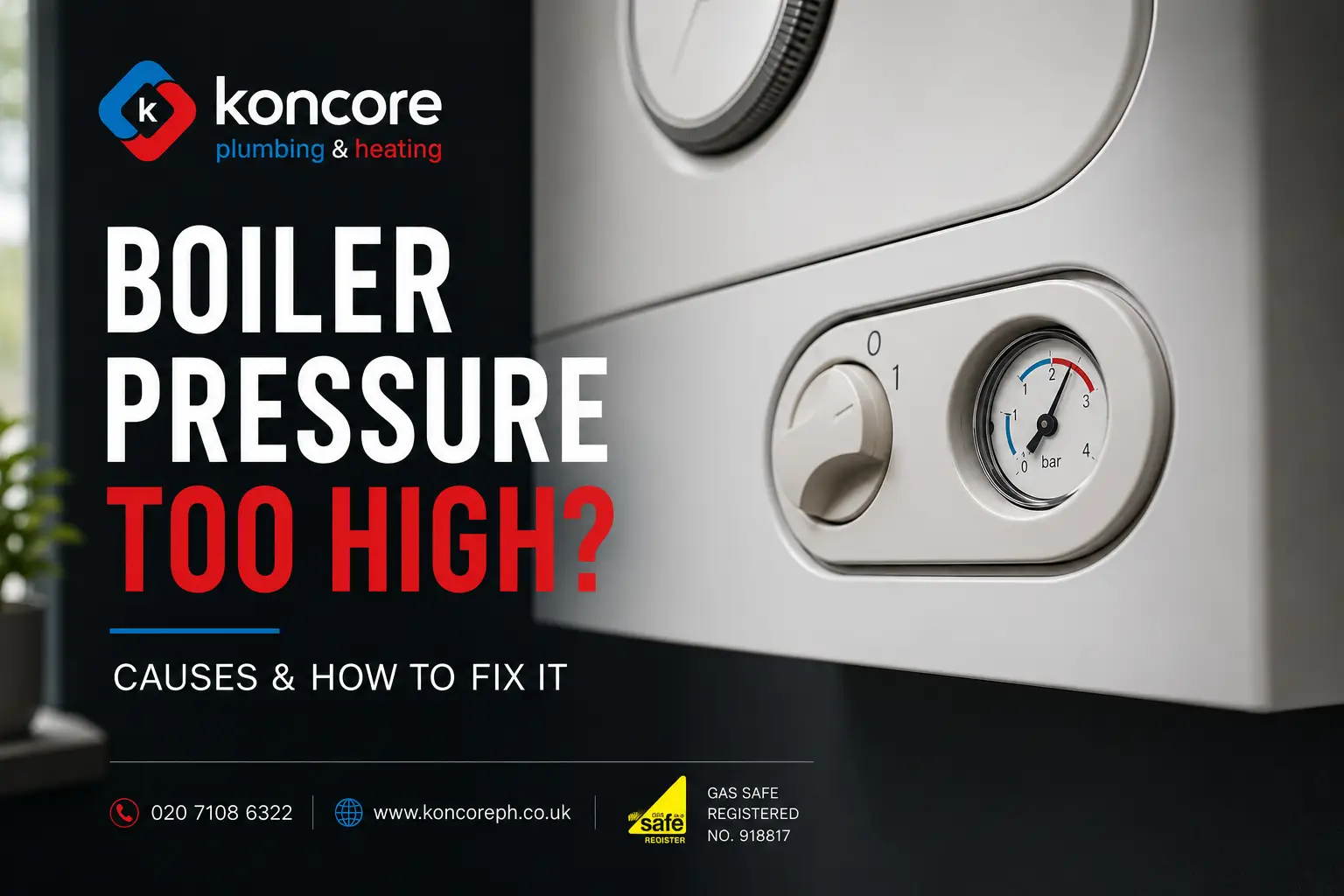
Quick answer: Pressure above about 2.5 bar (in the red) is most often an overfill from the filling loop — bleeding a radiator releases the excess. If pressure sits fine cold but shoots up when the heating runs, the expansion vessel has likely lost its charge and needs an engineer to recharge or replace.
Common Causes
Why boiler pressure reads high
These are the usual causes. The colour on the left shows whether it’s a safe homeowner check or a job for an engineer.
| What you see | Likely cause | What to do |
|---|---|---|
| Above 2.5 bar after topping up | Overfilled via the filling loop | Bleed a radiator to release some water |
| High only when the heating is on | Waterlogged expansion vessel | Needs an engineer to recharge it |
| Water from the external overflow pipe | PRV releasing excess pressure | Book an engineer to check the PRV and vessel |
| Pressure creeps up over time | Filling loop valve passing water | Check the loop valves are fully closed |
| Very high and the boiler locks out | Over-pressure cut-off | Bleed a radiator to reduce it; if it returns, book an engineer |
Safe Checks
How to bring it down safely
Safe to do
- Check both filling-loop valves are fully closed
- Bleed a radiator briefly to release water until the gauge settles to ~1.3 bar
- Note whether it’s high all the time, or only when the heating is running
Book an engineer if…
- Pressure climbs back up on its own after bleeding
- Water drips continuously from the external overflow pipe
- It only spikes high when the heating is running (expansion vessel)
Engineer Insight
What we usually find
Most high-pressure calls are simply an overfill after topping up — bleeding a little water out sorts it in minutes. If the gauge is fine cold but jumps to 2.5–3 bar when the heating runs, the expansion vessel has lost its air charge and can’t absorb the expansion. Recharging or replacing it is a routine repair and stops the overflow pipe dripping.
Costs
What repairs typically cost
Typical North London guide prices — you’ll always get an upfront quote before any work starts.
FAQs
High pressure — your questions answered
What is too high for boiler pressure?
Above about 2.5 bar (usually the red zone on the gauge) is too high. A little rise above 1.3 bar when the heating is running is normal; a reading stuck at 2.5–3 bar is not.
How do I lower boiler pressure?
Bleed a radiator briefly — hold a cloth under the valve and let a little water out until the gauge settles to around 1.3 bar. Make sure the filling-loop valves are fully closed first.
Why does pressure rise when the heating is on?
Water expands as it heats. Normally the expansion vessel absorbs this. If pressure jumps a lot when the heating runs, the vessel has likely lost its charge and needs recharging.
Is high boiler pressure dangerous?
The pressure-relief valve is designed to release excess safely, so it’s rarely dangerous. But persistent high pressure stresses the system and wastes water via the overflow, so it’s worth fixing.
Why is water dripping from the outside pipe?
That’s the pressure-relief valve letting out excess pressure — usually a sign of overfilling or a failed expansion vessel. An engineer can diagnose which and stop the drip.
Related
Keep troubleshooting
The opposite problem — and how to top it back up.
Read guidePressureHow to Repressurise a BoilerThe filling loop, step by step — and how to avoid overfilling.
Read guidePressureBoiler Losing PressureIf your pressure drops instead of climbing.
Read guideLeaksBoiler Leaking WaterA dripping overflow can look like a leak — what to check.
Read guideBoiler ProblemsBoiler Making NoiseHigh pressure and expansion issues can come with noise.
Read guideFault CodesBoiler Fault Code LibraryLook up a high-pressure fault code by brand.
Browse codesPressure in the red? We’ll bring it down.
Book a Gas Safe engineer to check the expansion vessel and PRV, or call and we’ll talk you through releasing the excess safely first.
Gas Safe Registered 918817 | North London specialists | Upfront pricing