
Leaks
Water Leaks In Your Heating System: What To Do First
Written & reviewed by our Gas Safe registered engineers · Last updated 22 July 2026
Leaks range from a barely-visible weep to water pouring onto a floor, and the right response differs for each. What they share is that ignoring one rarely helps — a slow drip today is often a bigger repair in three months. This guide covers how to tell if it’s an emergency, where leaks most commonly start, and exactly what to do in the first few minutes.
Gas Safe 918817 North London specialists Same-day callouts
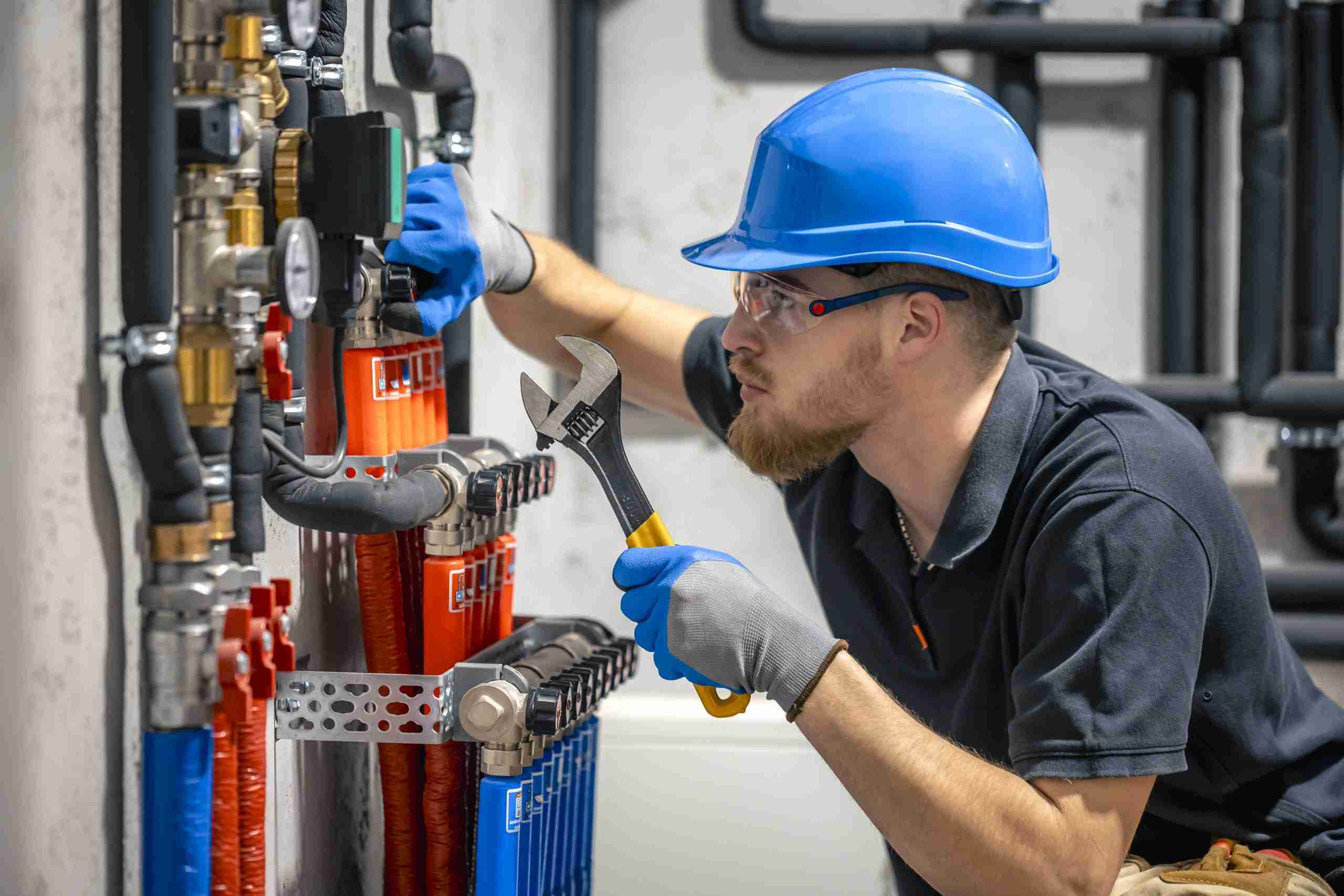
Quick answer: if water is actively pooling or dripping steadily, isolate it at the nearest valve or the main stopcock and call us straight away. A damp patch or stain that isn’t visibly growing can usually wait for a normally booked visit rather than an emergency callout.
Is This An Emergency?
Check these first
Water spraying or pouring uncontrollably: turn off the main stopcock immediately and call our emergency line.
Water near sockets, switches or the consumer unit: switch off electrics at the consumer unit if you can reach it safely, then call us.
Leak from the boiler with any smell of burning or gas: turn off the boiler at the isolation switch, ventilate the room, and see our gas safety guide as well as calling us.
Small, steady drip or damp patch that isn’t spreading: not usually an emergency — note the location and book a visit.
Where Leaks Start
The most common leak locations
| Location | What to watch for |
|---|---|
| Radiator valve joints | The single most common spot — a slow weep that stains the floor before you notice it |
| Pipe joints under floors | Often only a damp patch on the ceiling below or a musty smell before any water is seen |
| Hot water cylinder | Can lose a surprising amount of water quickly; often needs isolating at the cold feed |
| Boiler condensate pipe | Dripping outside is often normal; pooling or freezing indoors points to a blockage |
| External stopcock or rising main | Sometimes not inside at all — check near the meter or where the supply enters |
| Appliance connections | Washing machine and dishwasher hoses loosen over time — easy to rule out first |
What To Do First
Step by step, before help arrives
- Turn off the nearest isolation valve if you know where the leak is, or the main stopcock if you don’t — usually under the kitchen sink or near where the supply enters the property.
- Switch off electrics at the consumer unit if water is anywhere near sockets, switches or light fittings.
- Contain the water with towels or a bucket to limit damage to flooring and ceilings below.
- Photograph the leak and its location before you clean up — it helps us prepare the right parts before we arrive.
- Call us with what you’ve found — location, how fast it’s leaking, and whether you’ve managed to isolate it.
Common Mistakes
Where people go wrong with leaks
- Mopping up repeatedly without ever finding or isolating the actual source.
- Using PTFE tape or sealant as a permanent fix on a system under pressure — it buys time, not a solution.
- Ignoring a small leak near sockets or a consumer unit because the water flow seems minor.
- Letting a slow leak run for weeks because it ‘isn't that bad’, by which point flooring or ceilings below are often affected.
What Repairs Typically Cost
Typical leak repair costs
Typical North London ranges for guidance — every job gets a fixed price after a proper look. You’ll always get an upfront quote before any work starts.
FAQs
Leaks — your questions answered
How do I find my stopcock quickly in an emergency?
Most commonly under the kitchen sink, though it can also be under the stairs, in a utility room, or near where the supply pipe enters the property. Worth locating and testing it now, before you need it in a hurry.
If I turn off the stopcock, will that affect my heating as well as my cold taps?
The stopcock controls the incoming mains supply, so it stops cold water to taps and the system’s filling point, but it won’t immediately drain your sealed heating system. It does mean you can’t top up boiler pressure while it’s off, so don’t leave it closed long-term without getting the leak fixed.
Is it safe to use the heating while there's a small leak in the system?
Generally yes for a short period if the leak is minor and contained, but running the system keeps pressure on the leak point and can make it worse. Best to get it looked at promptly rather than running as normal for an extended time.
Can a leak cause damp or mould if left too long?
Yes — a hidden leak running for weeks is one of the most common causes of damp patches and mould, particularly under floors or behind walls where it isn’t immediately visible.
Why is water coming from my boiler's condensate pipe outside?
Some dripping is entirely normal, especially in cold weather — it’s the boiler’s waste water draining away. It becomes a concern if it’s pooling excessively, freezing and blocking the pipe, or coming from anywhere other than the intended outlet.
Is dripping from a radiator valve dangerous?
Not immediately dangerous, but it will worsen over time and can eventually stain or damage flooring. It’s usually a quick fix — often just tightening or replacing a compression fitting.
What's the difference between a leak and normal condensation?
Condensation appears as a fine film of moisture on cold surfaces like pipes or windows and evaporates on its own. A leak produces standing water, a growing stain, or a consistent drip that doesn’t go away with ventilation.
Will my insurance cover leak damage?
This depends entirely on your policy and the cause of the leak, so we’d always recommend checking directly with your insurer rather than assuming either way. Photographing the leak and damage as soon as you find it is worth doing regardless.
Can a leak affect my boiler pressure readings?
Yes — a leak anywhere in a sealed system will cause pressure to drop gradually, which is often how leaks get noticed in the first place rather than by seeing the water itself.
How do I tell a leak in my own property from a shared pipe or a neighbour's?
In a flat or converted property, water on a ceiling or wall doesn’t always originate directly above — it can travel along joists or through shared walls. If you can’t find an obvious source on your own pipework and appliances, check with neighbours or building management, as tracing it may need access to more than one property.
How quickly should I call someone once I've found a leak?
As soon as you’ve isolated it — unless it’s actively spreading or near electrics, in which case call immediately rather than waiting. Even a slow leak is worth booking within a few days rather than letting it run indefinitely.
Related
Related leak guides
Where boiler leaks start and what to do.
Read guideLeaksRadiator Leaking WaterThe emergency steps and the fix.
Read guideLeaksPipe Leak Under The SinkIsolating and fixing the usual culprits.
Read guideLeaksCeiling Leak From Bathroom AboveWhat to do first when it's coming through.
Read guidePressurePressure ProblemsWhen a leak shows up as falling pressure.
Read guidesEmergencyEmergency AdviceWhat to do in the first few minutes.
Read guidesFor a leak you can’t isolate yourself, book an emergency plumbing visit. We attend leak call-outs across Finchley, Camden and Islington, plus the rest of our coverage area.
Got water where it shouldn't be?
Isolate what you can and call us — we attend leak emergencies across North London same-day, subject to availability. Gas Safe registered, upfront pricing.
Gas Safe Registered 918817 | North London specialists | Upfront pricing