
Leaks
Ceiling Leak From the Bathroom Above? Make It Safe First
Reviewed by our Gas Safe registered engineers · Last updated 22 July 2026
Water coming through a ceiling from a bathroom above is one leak you shouldn’t wait on — it can reach light fittings and wiring, and a bulging ceiling can come down. Here’s how to make it safe, then track down the source.
Gas Safe 918817 North London specialists Upfront pricing
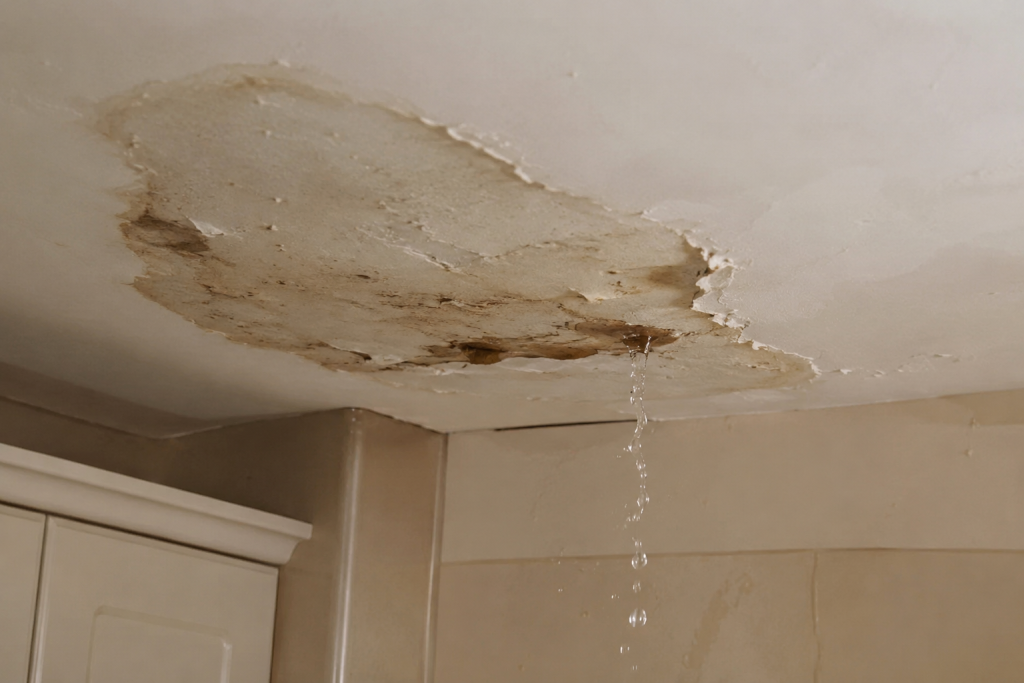
Quick answer: If water is near a light fitting or coming through the ceiling rose, turn off that room’s lighting circuit at the consumer unit — and don’t switch the lights on. Put buckets down, and if the ceiling is bulging, pierce the lowest point with a screwdriver to drain it in a controlled way (stand to the side). Stop all water use in the bathroom above, turn off the stopcock, then call us.
Find the Source
What the leak is telling you
When the water appears is the biggest clue to what’s leaking above. The colour on the left shows what you can safely do and what needs us out quickly.
| The sign | What it means | What to do |
|---|---|---|
| Water around a light fitting or ceiling rose | Water has reached the wiring | Turn off that lighting circuit at the consumer unit and call us |
| Ceiling bulging or sagging | Water pooling above the plaster | Pierce the lowest point to drain it into a bucket, standing clear |
| Damp only when the shower runs | Leaking shower waste or seal above | Stop using the shower; an engineer will reseal or renew the waste |
| Damp after a toilet flush or tap use | Leaking supply or soil pipe above | Turn off the stopcock and call us |
| Brown stain, no active drip | An old or intermittent leak | Trace it above; an engineer can find and fix the source |
| Water spreading fast through the ceiling | Burst or major leak above | Turn off the water and electrics and call us now |
First Steps
Make it safe right now
Make it safe now
- Stop all water use in the bathroom above and turn off the stopcock
- Turn off the lighting circuit to that room if water is near a fitting — don’t switch lights on
- Move furniture and electricals out from under the leak and put buckets down
- If the ceiling is bulging, pierce the lowest point to drain it in a controlled way (stand to the side)
Call us straight away if…
- Water is at or near a light fitting, socket, or the ceiling rose
- The ceiling is sagging badly or plaster is coming away
- Water is spreading fast or dripping through in several places
- You can’t find where it’s coming from once the water’s off
Engineer Insight
Why the stain isn’t under the leak
The trap with a ceiling leak is that the wet patch is rarely directly under the source — water runs along a joist or the top of the plasterboard and comes through at the lowest point, sometimes a metre or more away. That’s why we lift a board or use a damp meter rather than cut straight into the stain. The urgent part is always the same: get the water off above and keep it away from the electrics. Everything else can wait until it’s safe.
Costs
What repairs typically cost
Typical North London guide prices — you’ll always get an upfront quote before any work starts.
FAQs
Ceiling leaks — your questions answered
Is a ceiling leak from the bathroom dangerous?
It can be. Water tracking into light fittings or wiring is an electric-shock and fire risk, and a saturated ceiling can collapse. Turn off the electrics to that room, keep clear, and call us — don’t switch the lights on to check.
Should I pierce a bulging ceiling?
If it’s clearly bulging with trapped water, yes — pierce the lowest point with a screwdriver to let it drain into a bucket, standing to the side. That’s safer than letting the whole section give way at once. If you’re unsure, wait for us.
Why isn’t the damp patch under the bathroom fittings?
Water follows the joists and the top of the plasterboard and drips out at the lowest point, which can be a metre or more from the actual leak. Finding the true source is why we lift a board rather than cut into the stain.
How do I tell what’s leaking upstairs?
Note when it drips: only when the shower runs points to the shower waste or seal; after a toilet flush points to the soil pipe; constant dripping points to a supply pipe under pressure. That timing tells us where to look.
Who pays if it’s a flat above mine?
The leak is usually the responsibility of the flat it comes from, and buildings insurance often covers the damage. Get it stopped first, photograph everything, then sort responsibility — we can provide a report of the cause.
Related
Related guides
If the source turns out to be a supply pipe.
Read guideLeaksRadiator Leaking WaterA radiator above can leak through a ceiling too.
Read guideLeaksBoiler Leaking WaterWhen the leak traces back to the boiler.
Read guideEmergencyBoiler Breakdown EmergencyOur 24/7 emergency cover across North London.
Read guidePressureBoiler Losing PressureA hidden heating leak can drip through ceilings.
Read guideRadiatorsHow to Bleed a RadiatorRule a weeping bleed valve out as the source.
Read guideBrowse all Leak guides, or head back to the Help & Advice Centre.
Water coming through the ceiling? We’re on call.
Once it’s safe, book a Gas Safe engineer to find and fix the source — or call now, we keep 24/7 emergency slots across North London.
Gas Safe Registered 918817 | North London specialists | Upfront pricing