
Radiators
Radiator Problems: Cold Spots, Sludge And When Bleeding Isn't Enough
Written & reviewed by our Gas Safe registered engineers · Last updated 22 July 2026
A cold radiator is almost never the actual fault — it’s the symptom. Usually the real cause is trapped air, years of sludge, a stuck valve, or a system that was never balanced. These guides show you how to work out what’s actually wrong, when a five-minute bleed will sort it, and when you’re looking at a proper flush or a valve replacement.
Gas Safe 918817 North London specialists Upfront pricing
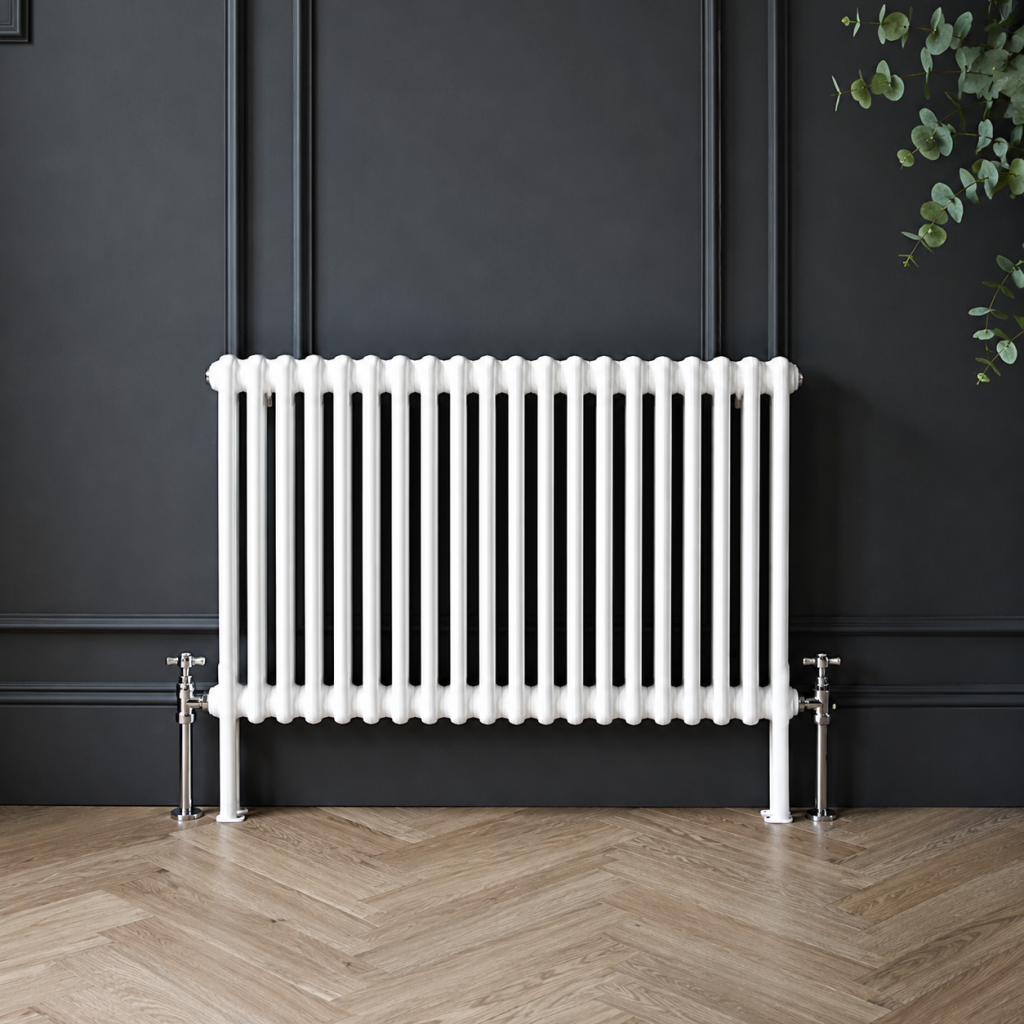
Quick answer: cold at the top with warm at the bottom means trapped air — bleed it. Cold at the bottom with warm at the top means sludge — that needs a flush, not a bleed. Cold all over while other radiators work fine usually points to a stuck valve.
Diagnosis
Diagnosing by where it's cold
| Where it's cold | Likely cause | What usually fixes it |
|---|---|---|
| Top of radiator, bottom warm | Trapped air | Bleed the radiator |
| Bottom of radiator, top warm | Sludge or debris settled | Powerflush or chemical clean |
| Whole radiator cold, others fine | Closed or seized valve | Check lockshield and TRV; may need replacing |
| One corner only | Localised sludge pocket | Removal and flush, rarely a full replacement |
| All radiators lukewarm | System-wide balancing or pump issue | Full system balance or pump check |
Repair Versus Replacement
Is it worth repairing, or time for a new radiator?
Usually worth repairing
Trapped air, a failed TRV, a leaking valve joint, or sludge build-up in an otherwise sound radiator. These are common, inexpensive fixes that restore full performance.
Usually worth replacing
Internal corrosion causing repeated pinhole leaks, a radiator that’s visibly rusted through, or one that’s simply undersized for the room and has never heated it properly regardless of servicing.
Step By Step
How to bleed a radiator safely
- Turn the heating on and let all radiators heat up fully so you can feel which are cold at the top.
- Turn the heating off before you start — never bleed a radiator while the pump is running.
- Fit the bleed key onto the valve at the top corner, with a cloth ready to catch drips.
- Turn the key slowly anti-clockwise until you hear a hiss of escaping air.
- As soon as the hiss stops and water begins to appear, close the valve immediately.
- Check your boiler pressure gauge afterwards — bleeding lowers system pressure and it will likely need topping up.
- Turn the heating back on and check the radiator now heats evenly across its full surface.
What Repairs Typically Cost
Typical radiator repair costs
Larger or designer models cost more. You’ll always get an upfront quote before any work starts.
FAQs
Radiators — your questions answered
How do I know which radiator to bleed first if several feel lukewarm?
Start with the radiator furthest from the boiler, and upstairs if you have a two-storey system, since air naturally collects there first. Work back towards the boiler afterwards if others still need it.
Is it normal for radiators to need bleeding more than once a year?
Bleeding more than once or twice a year usually means air is getting into the system somewhere — often an automatic air vent, a worn pump seal, or a header tank issue on older systems — worth getting checked rather than bleeding repeatedly.
Can I powerflush just one radiator instead of the whole system?
Yes — a single radiator can be isolated and flushed on its own, which is often the sensible first step if only one or two are affected rather than committing to a full system flush.
Why does my radiator make a dripping sound after I've bled it?
Usually just air working its way back through the system as pressure rebalances, and it typically settles within a few hours. If dripping continues from the valve itself, the bleed screw may not be fully closed.
Do thermostatic radiator valves (TRVs) wear out?
Yes — typically after 8–10 years the internal pin can seize, usually closed after standing unused over summer. Gently working the pin free often resolves it; if not, the valve head is a simple like-for-like swap.
Is it worth replacing a radiator that's just cosmetically rusty outside?
Surface rust on the casing alone isn’t usually a reason to replace — it can often be sanded and repainted. Internal corrosion causing leaks or reduced heat output is the more important factor.
Why is my radiator hot but the room still feels cold?
This points away from the radiator and towards heat loss — draughts, poor insulation, or a radiator that was undersized for the room’s heat-loss when originally installed.
Can the wrong size radiator cause cold spots?
An undersized radiator won’t develop cold spots as such, but it will struggle to heat the room fully even when working perfectly, which is often mistaken for a fault.
Should all radiators in a room be roughly the same temperature?
Not necessarily identical, but a significant difference between radiators in the same room usually points to a balancing issue rather than normal variation.
Can I bleed a radiator on a combi system the same way as one with a cylinder?
Yes — the bleeding process is identical. The one difference is that on a combi you’ll need to top up pressure via the filling loop afterwards, whereas an older gravity-fed system with a loft header tank usually re-pressurises itself.
Is it safe to bleed radiators myself if I have an unvented cylinder?
Yes — bleeding radiators is unrelated to your hot water cylinder type. The cylinder and the heating circuit are separate, so releasing air from a radiator won’t affect your hot water supply or pressure.
Related
Related radiator guides
The trapped-air fix, step by step.
Read guideRadiatorsRadiator Cold At The BottomWhen it's sludge, not air.
Read guideRadiatorsHow To Bleed A RadiatorThe full how-to, done safely.
Read guideRadiatorsRadiator Not Getting HotValve, balancing or pump.
Read guideRadiatorsRadiator LeakingWhich part is leaking and what to do.
Read guideHeatingHeating ProblemsWider system faults explained.
Read guidesIf bleeding and balancing haven’t solved it, powerflushing clears sludge a bleed can’t. We cover radiator repairs across Islington, Hornsey and Haringey, plus the rest of our coverage area.
Radiator still not right after bleeding?
If bleeding hasn’t fixed it, the cause is likely sludge or a valve fault — we can diagnose and fix it in one visit. Gas Safe registered, North London, upfront pricing.
Gas Safe Registered 918817 | North London specialists | Upfront pricing