
Emergency
Carbon Monoxide: The Warning Signs You Mustn’t Ignore
Reviewed by our Gas Safe registered engineers · Last updated 22 July 2026
Carbon monoxide is a poisonous gas you can’t see or smell, produced when a boiler or gas appliance burns fuel incompletely. Knowing the signs — on your body and on your appliances — can save lives. Here’s what to watch for and exactly what to do.
Gas Safe 918817 North London specialists Upfront pricing
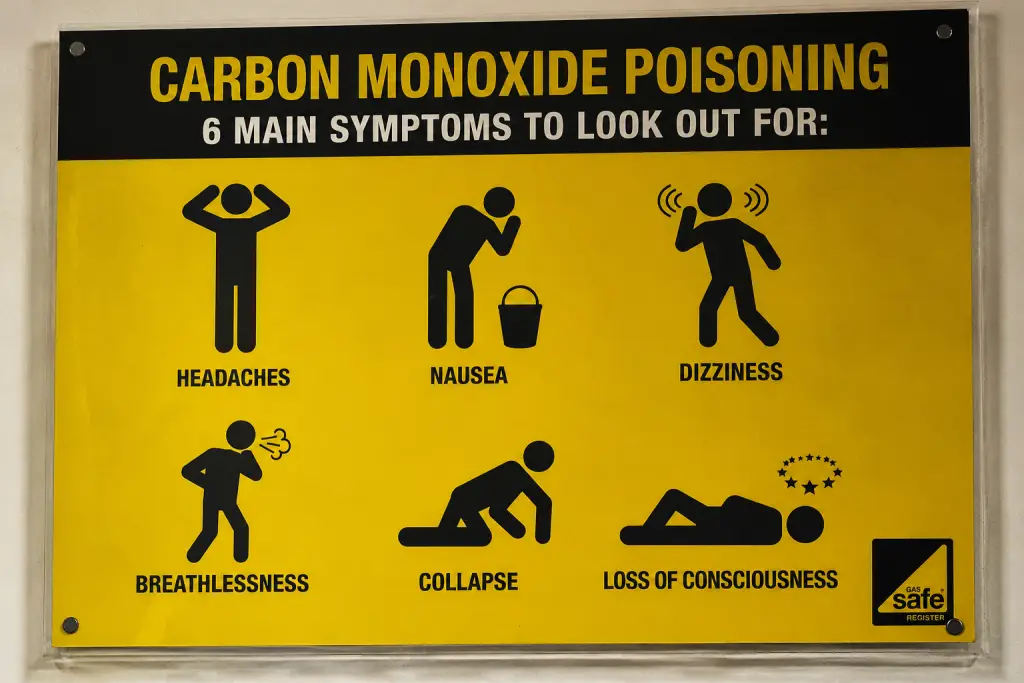
Quick answer: If you suspect carbon monoxide, act now — turn off the appliance if you safely can, open windows and doors, get everyone outside into fresh air, and call the National Gas Emergency line on 0800 111 999. Get medical help if anyone feels unwell. Warning signs on your body: headaches, dizziness, nausea and tiredness that ease when you leave the house. Warning signs on the boiler: a yellow or orange flame (not crisp blue), sooty or brown stains around it, and a pilot light that keeps going out. Fit an audible CO alarm — it’s the only reliable way to detect it.
The Signs
Warning signs and what to do
The colour on the left shows what’s an immediate emergency, what needs an engineer, and what you can do to protect yourself.
| The sign | What it means | What to do |
|---|---|---|
| Headaches or dizziness that ease when you leave the house | Possible CO exposure | Get everyone into fresh air and call 0800 111 999 now |
| Your CO alarm is sounding | CO has been detected | Ventilate, leave the property, and call 0800 111 999 |
| Yellow or orange boiler flame (not blue) | Incomplete combustion | Stop using the boiler and call us to check it |
| Sooty or brown-yellow stains around the boiler | Poor combustion or flue spillage | Stop using it; an engineer must inspect the flue |
| Pilot light keeps blowing out | Possible flue or combustion fault | An engineer should check the appliance |
| No CO alarm fitted | You can’t detect CO | Fit an audible CO alarm to EN 50291 today |
Stay Safe
Protect your home
Protect yourself
- Fit an audible CO alarm (to EN 50291) near your boiler and sleeping areas
- Have your boiler and gas appliances serviced every year by a Gas Safe engineer
- Keep vents and flues clear — never block an air brick or flue outlet
- Know the symptoms: headaches, dizziness, nausea and tiredness that ease outdoors
Act now if…
- Your CO alarm sounds — ventilate, get out, and call 0800 111 999
- Anyone has headaches, dizziness or nausea that improve outside the home
- The boiler flame is yellow or orange, or there’s soot around the appliance
- You smell exhaust fumes, or the room feels stuffy when the boiler runs
Engineer Insight
Why an alarm isn’t optional
The dangerous thing about carbon monoxide is that it gives you almost nothing to go on — no colour, no smell, and symptoms that feel like a cold or tiredness. That’s why an audible CO alarm isn’t optional; it’s the only thing that reliably warns you. The commonest causes we find are a poorly serviced or badly ventilated boiler, a blocked flue, or someone using an outdoor appliance indoors. An annual service and a working alarm together remove almost all of the risk.
Costs
Staying protected
Typical North London guide prices — you’ll always get an upfront quote before any work starts.
FAQs
Carbon monoxide — your questions answered
What are the symptoms of carbon monoxide poisoning?
Headaches, dizziness, nausea, breathlessness, tiredness and confusion — often mistaken for flu, but they typically ease when you leave the house and return when you go back in. High exposure can cause collapse. Get into fresh air and call 0800 111 999.
What should I do if my CO alarm goes off?
Treat it as real: open doors and windows, turn off gas appliances if you can do so safely, get everyone outside, and call the National Gas Emergency line on 0800 111 999. Don’t go back in until it’s declared safe.
What causes carbon monoxide from a boiler?
Incomplete combustion — usually from a poorly serviced or faulty boiler, a blocked or damaged flue, or inadequate ventilation. A yellow flame and sooty marks are visible warning signs. An annual service catches most causes.
Can I smell carbon monoxide?
No. Carbon monoxide is completely colourless and odourless, which is what makes it so dangerous. You can’t rely on your senses — an audible CO alarm is the only reliable detection.
Where should I put a carbon monoxide alarm?
Fit one in the same room as each fuel-burning appliance, roughly head height and about 1–3 metres away, plus one near sleeping areas. Use an audible alarm marked to EN 50291, and test it regularly.
Related
Related guides
What to do when the boiler fails.
Read guideMaintenanceSigns Your Boiler Needs ServicingServicing prevents CO risks.
Read guideMaintenanceAnnual Boiler ServiceThe combustion check that keeps you safe.
Read guideBoiler ProblemsBoiler Making NoiseOther signs something is wrong.
Read guideBoiler ProblemsBoiler Not IgnitingIgnition and combustion faults.
Read guideFault CodesVaillant Fault CodesLockouts that guard against unsafe combustion.
Read guideBrowse all Emergency guides, or head back to the Help & Advice Centre.
Worried about CO? Book a safety check.
Book a Gas Safe engineer for a boiler service and flue check, or call. If you suspect carbon monoxide right now, call the National Gas Emergency line on 0800 111 999 first. North London, upfront pricing.
Gas Safe Registered 918817 | North London specialists | Upfront pricing