Leaks
Boiler Leaking Water? Where It’s Coming From
Reviewed by our Gas Safe registered engineers · Last updated 22 July 2026
A leak from the boiler itself usually points to pressure that’s too high, a failed seal, or internal corrosion — some are a simple fix, others mean a part needs replacing. This guide helps you find the source and know what to do right now.
Gas Safe 918817 North London specialists Upfront pricing
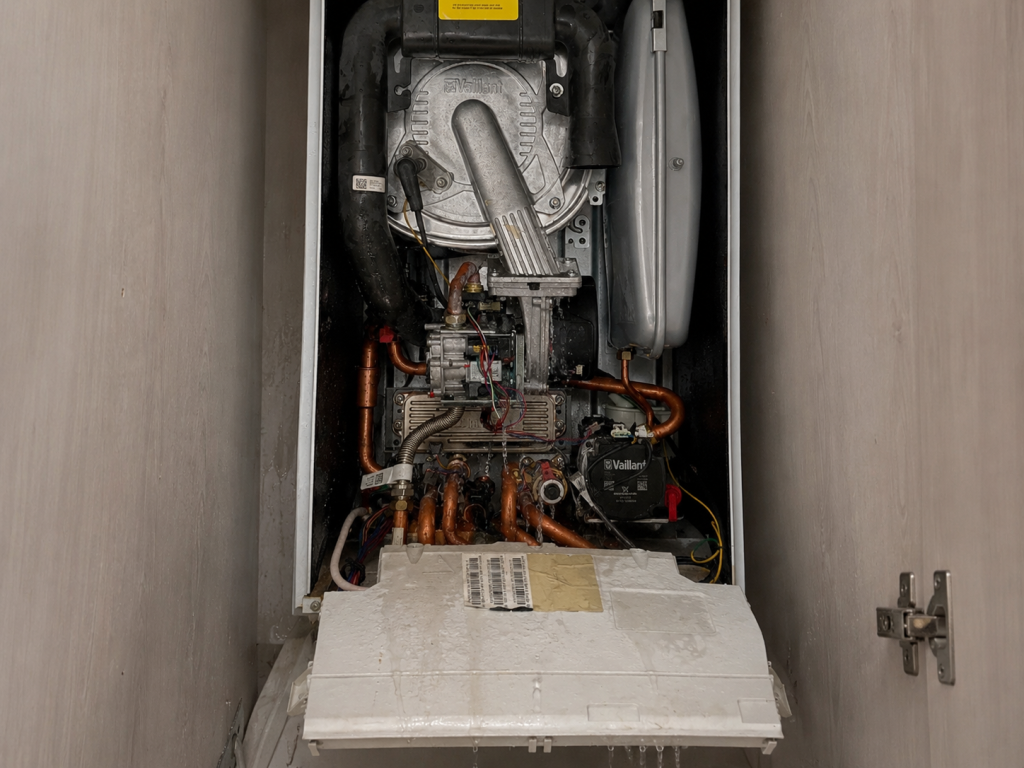
Quick answer: Turn the boiler off and dry the area so you can see where the water returns. A drip from the copper pipe outside your wall usually means pressure is too high — releasing some by bleeding a radiator can stop it. Water pooling from inside the casing (the pump, seals or heat exchanger) needs an engineer — never take the cover off yourself. If it’s running fast, turn off the water supply to the boiler.
Find the Source
Where a boiler leaks — and what it means
Turn the boiler off, dry everything, and note exactly where the water reappears. The colour on the left shows whether it’s a safe homeowner check or a job for a Gas Safe engineer.
| Where the water appears | Likely cause | What to do |
|---|---|---|
| Dripping from the pipe outside the wall | Pressure too high — the relief valve is discharging | Check the gauge; if it’s over 2.5 bar, bleed a radiator to bring it down |
| Weeping from the pressure relief valve | Worn valve seat or trapped grit | An engineer can service or replace the relief valve |
| Pooling underneath the pump | Failed pump seal | An engineer will refit or replace the pump seal |
| From the white plastic condensate pipe | Cracked or blocked condensate trap | An engineer can clear or refit the trap |
| From the heat exchanger inside | Internal corrosion or a cracked exchanger | Usually needs replacing — call us to weigh repair against a new boiler |
| Around the pipe joints under the boiler | Loose or corroded compression joint | An engineer can remake the joint |
| Water is rusty or discoloured | Internal corrosion, inhibitor depleted | Replace the affected part and re-dose inhibitor |
First Steps
What to do right now
Safe to do
- Turn the boiler off and put towels down to protect the floor
- Check the pressure gauge — a high reading means the relief valve may just be discharging
- If the gauge is over about 2.5 bar, bleed a radiator to bring pressure back to 1–1.5 bar
- Wipe everything dry so you can see whether the leak returns, and from where
Stop and call us if…
- Water is coming from inside the boiler casing — don’t remove the cover
- You can smell gas or burning, or the leak is near the electrics
- The water is discoloured or rusty (internal corrosion)
- It’s leaking fast — turn off the water supply to the boiler and call us
Engineer Insight
What we usually find
The leak we’re called to most is the pressure relief valve weeping — and more often than not the real cause is the expansion vessel losing its charge, so the system over-pressurises as it heats. Recharge or replace the vessel and the weeping stops. The serious one is a leak from the heat exchanger: on an older boiler the repair can cost more than the unit is worth, so we’ll always tell you honestly which side of that line you’re on before you spend anything.
Costs
What repairs typically cost
Typical North London guide prices — you’ll always get an upfront quote before any work starts.
FAQs
Boiler leaks — your questions answered
Is a leaking boiler dangerous?
A water leak isn’t usually dangerous in itself, but water and electricity don’t mix — a leak can corrode parts and reach the PCB over time. Turn the boiler off, keep the area dry, and don’t use it until it’s checked. If you smell gas or burning, turn it off and call us straight away.
Why is water dripping from the pipe outside my wall?
That’s the pressure relief valve discharge pipe. It releases water when system pressure gets too high — often because the expansion vessel has lost its charge. Check the gauge; if it’s high, the boiler is doing its job, but the underlying cause still needs fixing.
Can I still use my boiler if it’s leaking?
Better not to. Even a small leak can drop the pressure, damage internal parts and reach the electrics. Switch it off and book an engineer — most leaks are far cheaper to fix when caught early.
Why does my boiler only leak when the heating is on?
Heat raises the pressure. If the expansion vessel or relief valve can’t cope, that extra pressure forces water out through the relief valve. It points to a vessel or valve issue rather than a hole in the boiler.
How much does it cost to fix a leaking boiler?
It depends entirely on the source — a relief valve or expansion vessel is a few hundred pounds, while a heat exchanger can cost more than an older boiler is worth. We diagnose first and give you an upfront quote before any work.
Related
Related guides
A leak is the most common reason pressure keeps dropping.
Read guideLeaksRadiator Leaking WaterIf the leak is at a radiator rather than the boiler.
Read guidePressureBoiler Pressure Too HighHigh pressure is what makes the relief valve weep.
Read guideEmergencyBoiler Breakdown EmergencyWhat to do if the boiler has failed, not just leaked.
Read guideMaintenanceSigns Your Boiler Needs ServicingServicing catches worn seals before they start to leak.
Read guideCentral HeatingPowerflush GuideInhibitor slows the corrosion behind internal leaks.
Read guideBrowse all Leak guides, or head back to the Help & Advice Centre.
Boiler leaking? Let’s find the source.
Book a Gas Safe engineer to trace and stop the leak, or call — for a fast leak we keep 24/7 emergency slots across North London.
Gas Safe Registered 918817 | North London specialists | Upfront pricing