
Radiators
Radiator Leaking? Where It’s Coming From and How to Fix It
Reviewed by our Gas Safe registered engineers · Last updated 22 July 2026
The fix for a leaking radiator depends entirely on where it’s leaking — the valve, the spindle, the bleed point, or the radiator body. This guide helps you pinpoint it. For a bad leak or water damage, see our emergency radiator-leak guide.
Gas Safe 918817 North London specialists Upfront pricing
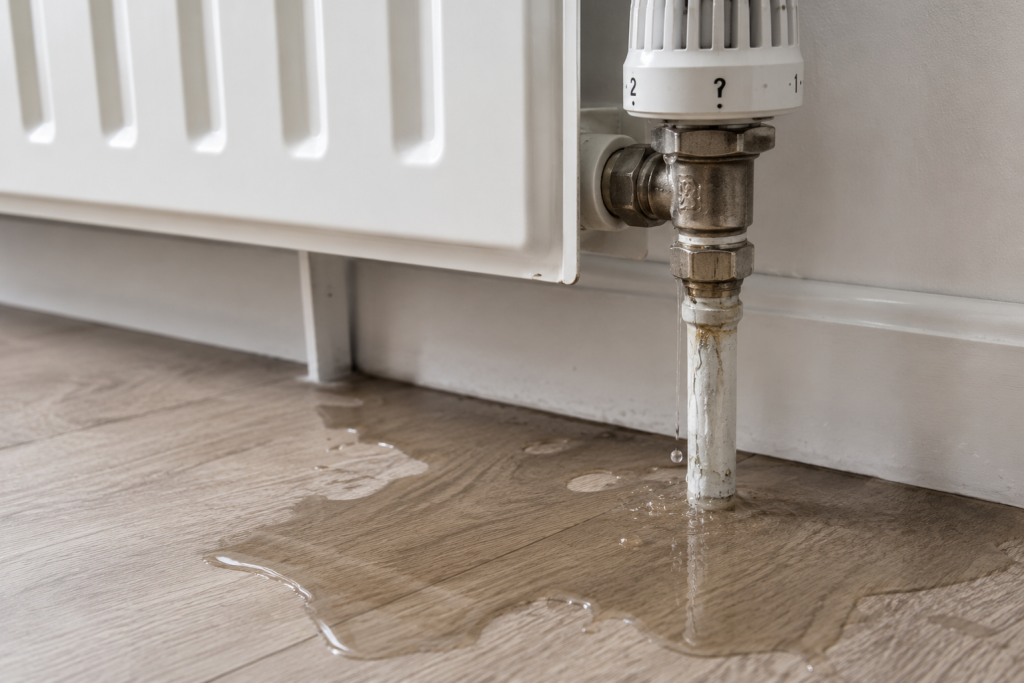
Quick answer: Dry everything, then watch where the water reappears. A drip from the valve is usually a loose nut or a worn spindle gland. A weep from the top corner is the bleed valve. A damp patch on the panel itself is pinhole corrosion — that radiator normally needs replacing. Catch the water, and turn the radiator valves off if it’s running.
Find the Source
Where radiators leak — and the fix
Dry the area and pinpoint the exact spot. The colour on the left shows whether it’s a safe homeowner check or a job for an engineer.
| Where it’s leaking | Likely cause | What to do |
|---|---|---|
| Drip from the valve nut | Loose compression nut | Nip up the nut a quarter-turn with a spanner |
| Water at the valve spindle | Worn gland or O-ring | An engineer can repack or replace the valve |
| Weep from the top corner | Bleed valve not fully closed | Close the bleed valve fully; replace the plug if it weeps |
| Damp patch on the panel | Pinhole corrosion | The radiator usually needs replacing |
| Only leaks when hot | Expansion opening a weak joint | An engineer should re-make the joint |
| Rusty water pooling | Internal corrosion, no inhibitor | Flush, add inhibitor; replace if perforated |
First Steps
What to do right now
Safe to do
- Put a container and towels under the leak to protect the floor
- Dry everything, then watch exactly where water returns
- For a small valve drip, nip up the nut a quarter-turn
- Close the bleed valve fully if it’s weeping there
Stop and call us if…
- Water is running fast — turn both radiator valves off and call us
- There’s a damp patch on the radiator body (pinhole corrosion)
- The leak is soaking floors or ceilings — see our emergency guide
Engineer Insight
What we usually find
Most radiator leaks are at the valve — either a compression nut that’s worked loose (a quick nip-up) or a worn spindle gland (a repack or new valve). The one that can’t be patched is a pinhole in the panel itself: that’s internal corrosion, and the radiator has to be swapped. Adding inhibitor after any repair slows corrosion across the whole system.
Costs
What repairs typically cost
Typical North London guide prices — you’ll always get an upfront quote before any work starts.
FAQs
Leaking radiators — your questions answered
How do I find where my radiator is leaking?
Dry the whole radiator and the pipes, put down dry paper, then watch where the water reappears — the valve nut, the spindle, the bleed valve, or the panel itself. Where it comes from decides the fix.
Can I fix a leaking radiator valve myself?
A slightly loose compression nut can be nipped up a quarter-turn with a spanner. A leak from the spindle (the bit the valve head turns) needs repacking or a new valve — that’s a job for an engineer.
My radiator is leaking from the middle — can it be repaired?
A leak from the panel itself is usually a pinhole caused by internal corrosion. These can’t be reliably patched, so the radiator normally needs replacing. We can quote and fit a like-for-like.
Is a leaking radiator an emergency?
A slow drip isn’t, but a fast leak that’s soaking floors is. Turn both radiator valves off to isolate it and call us — and see our emergency radiator-leak guide for what to do first.
How do I stop radiators leaking in future?
Keep the system dosed with corrosion inhibitor and have it checked at your annual service — it slows the internal rusting that causes pinholes and seizes valves.
Related
Related guides
What to do first when a radiator leak is causing water damage.
Read guidePressureBoiler Losing PressureA radiator leak is a common reason pressure keeps dropping.
Read guideLeaksBoiler Leaking WaterIf the leak is at the boiler rather than a radiator.
Read guideRadiatorsHow to Bleed a RadiatorDon’t confuse a weeping bleed valve with a real leak.
Read guideCentral HeatingPowerflush GuideInhibitor and flushing to slow the corrosion that causes leaks.
Read guideRadiatorsRadiator Cold at the TopRepeated air can be a sign of a small leak too.
Read guideBrowse all Radiator guides, or head back to the Help & Advice Centre.
Radiator leaking? We’ll stop it.
Book a Gas Safe engineer to repair the valve or replace the radiator, or call — for a fast leak we keep 24/7 emergency slots across North London.
Gas Safe Registered 918817 | North London specialists | Upfront pricing