
Maintenance
Boiler & Heating Maintenance: A Simple Year-Round Checklist
Written & reviewed by our Gas Safe registered engineers · Last updated 22 July 2026
Most of the emergency callouts we attend in the depths of winter were preventable earlier in the year. Maintenance isn’t just the annual service — it’s a handful of small checks spread across the seasons that catch small issues before they become a no-heat emergency on the coldest night. These guides set out what’s worth doing and when, what a service actually covers, and which tasks are safe to do yourself.
Gas Safe 918817 North London specialists Upfront pricing
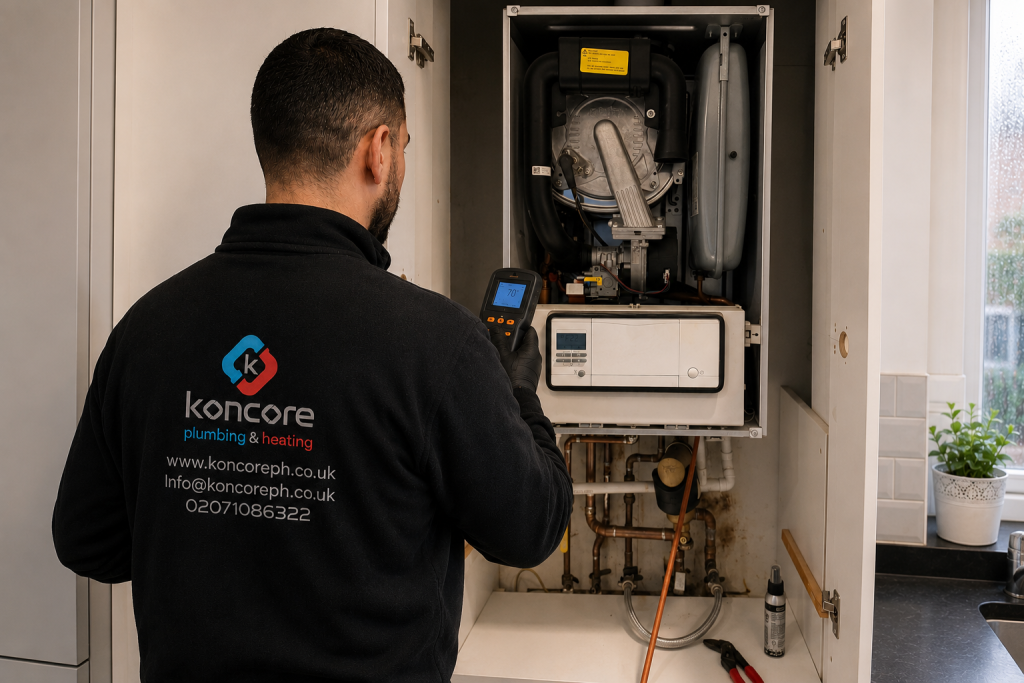
Quick answer: book your annual service in late summer or early autumn, before the winter rush, and check your pressure and bleed radiators as needed throughout the year. That alone prevents the majority of the emergency callouts we see each winter.
Your Maintenance Calendar
What to check, and when
Autumn (Sep–Nov)
Book your annual service before winter demand peaks. Test the heating fully while it’s still mild, and bleed any radiators that need it after a summer of disuse.
Winter (Dec–Feb)
Keep an eye on your condensate pipe during cold snaps, check pressure regularly, and know where your stopcock is in case of a freeze-related burst.
Spring (Mar–May)
Check for any leaks that may have appeared over winter now the heating’s used less. If the system’s felt sluggish all winter, spring is a good time to consider a powerflush.
Summer (Jun–Aug)
The best time for bigger works like a system upgrade or cylinder replacement, since heating isn’t needed daily. Book your next service early, before the autumn rush.
What's Included
What an annual service actually covers
- A visual inspection of the boiler casing, seals and flue for any signs of damage or corrosion.
- Checking the flue terminal is clear and venting correctly.
- Testing all safety devices to confirm they shut the boiler down correctly if a fault occurs.
- Checking gas pressure and burner combustion are within the manufacturer’s specified range.
- Cleaning the burner and internal components if needed, based on what’s found during inspection.
- Checking system pressure and topping up if required.
- Issuing a service record confirming what was checked and any recommendations.
Who Should Do What
DIY tasks versus engineer-only tasks
Safe to do yourself
Bleeding radiators, checking and topping up pressure via the filling loop, testing smoke and CO alarms, and keeping the area around the boiler clear and ventilated.
Always needs an engineer
Annual servicing and gas safety checks, anything involving the gas supply or internal boiler components, and powerflushing or system chemical treatments.
What Maintenance Typically Costs
Typical maintenance costs
Combining a service with a landlord gas safety check on the same visit is often available at a reduced rate — worth asking about when booking.
FAQs
Maintenance — your questions answered
How long does an annual boiler service actually take?
Typically 30–45 minutes for a straightforward combi boiler with no issues found, longer if anything needs attention or the system hasn’t been serviced in several years.
What happens if I miss a year of servicing?
Nothing happens immediately, but you lose the early-warning benefit of catching small issues before they become breakdowns, and it can affect your warranty if the manufacturer requires proof of annual servicing.
Can I do my own boiler service to save money?
No — a proper service requires Gas Safe registration by law, and includes safety checks (gas pressure, combustion analysis, safety device testing) that need calibrated equipment and training to carry out correctly.
Is powerflushing something I need every year, or just occasionally?
Occasionally, not annually — typically only when there’s evidence of sludge build-up (cold spots, noisy system, poor circulation) or as part of installing a new boiler onto an older system.
Does servicing affect my boiler's warranty?
Most manufacturer warranties require proof of annual servicing to remain valid, so skipping it can invalidate cover even if the eventual fault is unrelated to what was missed.
What's the best time of year to book a service?
Late summer or early autumn, before the winter rush when engineers get booked up and any fault found means a longer wait for a repair slot during peak season.
Do I need to be home for the whole service appointment?
Yes — someone needs to provide access throughout, as the engineer will need to check the boiler itself plus system pressure and, where relevant, radiators or the cylinder.
Can regular maintenance actually prevent a full breakdown?
Not every fault is preventable, but the majority of winter breakdowns we see trace back to something that would have been caught at a service — a failing part, a pressure issue, or early signs of sludge.
Anything I should do to prepare before an engineer arrives for a service?
Just make sure the boiler and any nearby cupboards are accessible, and it’s worth noting down anything that’s seemed off recently, even minor, so it can be checked at the same time.
Is it worth signing up to a boiler cover or service plan?
It depends on your appetite for predictable monthly costs versus paying as you go — a cover plan can cap unexpected repair bills, but if you’re on top of your own servicing and the boiler is relatively new and reliable, paying per service and repair can work out cheaper over time. Weigh your boiler’s age and reliability against the plan’s monthly cost.
I've just moved in — how do I find out when the boiler was last serviced?
Ask the previous owner or your solicitor for the service history and warranty documentation as part of the purchase, since you can’t easily tell just by looking at the boiler. If no records are available, treat it as overdue and book a service soon after moving in, both for peace of mind and to establish a clear service history going forward.
Related
Related maintenance guides
What a service is and why it matters.
Read guideMaintenanceBoiler Maintenance ChecklistThe year-round tasks in one place.
Read guideMaintenanceSigns Your Boiler Needs ServicingThe warning signs to watch for.
Read guideMaintenanceWhat's Included In A ServiceExactly what the engineer checks.
Read guideLandlord CertificatesLandlord CertificatesIf you manage a rented property.
Read guidesBuying GuidesBuying GuidesWhen a boiler is beyond maintaining.
Read guidesBook your annual boiler service today. We provide maintenance across Hornsey, Haringey and Islington, plus the rest of our coverage area.
Due an annual service?
Book now before the autumn rush — it’s the single best thing you can do to avoid a winter breakdown. Gas Safe registered, North London, upfront pricing.
Gas Safe Registered 918817 | North London specialists | Upfront pricing