
Landlord Certificates
Landlord Gas & Heating Certificates: What You Need To Have
Reviewed by our Gas Safe registered engineers · Last updated 22 July 2026
The gas safety check is the certificate almost every landlord knows about — but it’s rarely the only thing worth having in order. These guides cover what’s commonly required for a rented gas or heating installation, roughly what it costs, and what actually happens during the check. Requirements can change, so treat this as general guidance and confirm anything property-specific with HSE or your local authority.
Gas Safe 918817 North London specialists Portfolios welcome
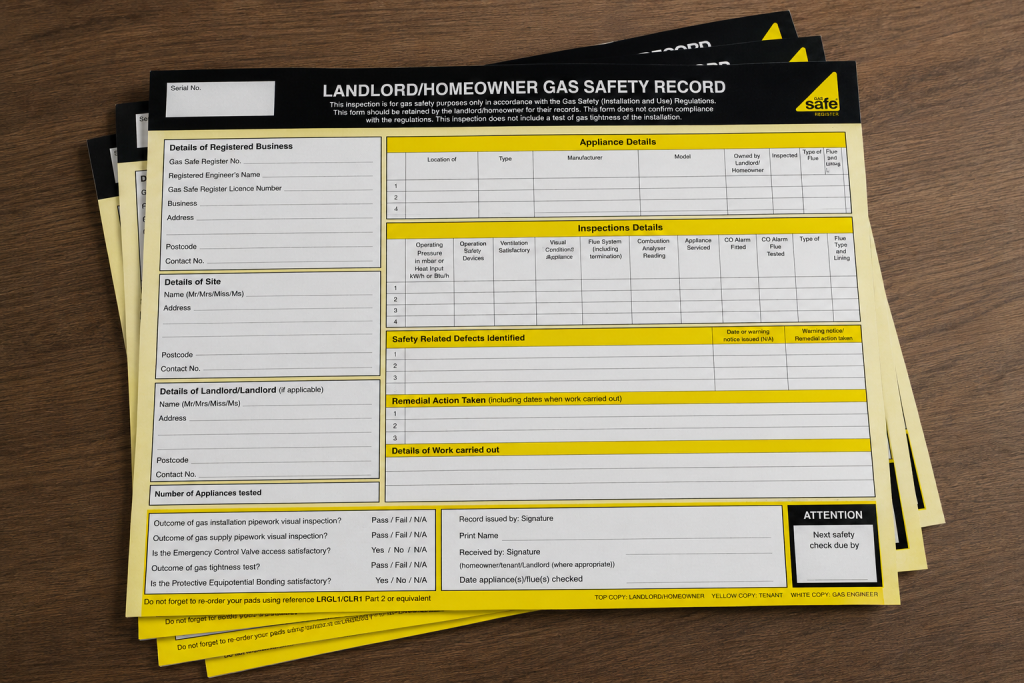
Quick answer: landlords in England and Wales need an annual Gas Safety Record (often still called a CP12) covering every gas appliance and flue in a let property. Electrical condition reports and other checks are a separate requirement outside gas safety — always confirm current rules for your specific property with HSE or a qualified adviser, as this guidance isn’t a substitute for legal advice.
What's Typically Required
Certificates and checks landlords commonly need
This is general guidance rather than a definitive legal checklist — requirements can vary and change, so confirm anything specific to your property with HSE or your local authority.
| Certificate / check | What it covers | Typical renewal |
|---|---|---|
| Gas Safety Record (CP12) | Every gas appliance and flue in the property | Annually |
| EICR (electrical) | Fixed electrical wiring — via a registered electrician, outside our scope as a gas & plumbing firm | Typically every 5 years |
| Boiler service record | Not a legal certificate itself, but strongly recommended and often required by warranty terms | Annually |
| Smoke & CO alarm compliance | Working alarms fitted and tested in the right locations | At each new tenancy and periodically |
Common Mistakes
Where landlords most often slip up
- Letting the gas safety record lapse for a few days or weeks between tenancies, assuming it doesn't matter if the property's empty.
- Forgetting appliances in outbuildings, garages or converted lofts when booking the check.
- Not providing tenants with a copy of the current certificate within the required timeframe.
- Assuming an annual boiler service automatically counts as the gas safety check — they're related but not the same, and the service alone doesn't produce a valid record.
- Not testing smoke and CO alarms specifically at each change of tenancy, relying instead on whenever they were last checked.
What To Expect
What happens during a gas safety check
- We check each gas appliance in turn, including the boiler, any gas fires, and gas cookers if present.
- Every appliance is tested for correct gas soundness and safe operating pressure.
- Flues are checked to confirm they’re clear and venting correctly.
- Ventilation to each appliance is checked to make sure nothing’s been blocked or altered since the last visit.
- Safety devices on each appliance are tested to confirm they shut off correctly if a fault occurs.
- We issue a signed Gas Safety Record on the day, which you keep on file and provide a copy of to tenants.
Costs
What it typically costs
Indicative North London pricing — we'll always confirm an exact price for your specific property before booking.
FAQs
Landlord certificates — your questions answered
How soon before a new tenancy starts do I need the gas safety check done?
It’s best practice to have a valid, in-date certificate before a tenant moves in, and to make sure it doesn’t lapse during the tenancy. We’d recommend booking with enough notice that a failed appliance can be fixed and rechecked before the move-in date.
What happens if my current CP12 expires before I can book a renewal?
The check can be carried out up to 2 months before the expiry date without losing time off the new certificate’s 12-month validity, so booking early avoids any gap. If it does lapse, get it renewed as soon as possible rather than leaving the property without a valid record.
Do I need a gas safety certificate for a property with no gas appliances at all?
If there’s genuinely no gas supply or gas appliances, a gas safety record isn’t applicable. Worth double-checking there’s nothing gas-fed you’ve overlooked, such as an old gas fire that’s still connected even if unused.
Can I use the same gas safety check for multiple properties on the same day?
Each property needs its own separate check and certificate, but we’re happy to book several properties on the same day or week for landlords managing a portfolio, often at a reduced per-property rate.
Do I have to give tenants a copy of the certificate, or just keep it on file?
Tenants are generally required to receive a copy, not just have it available on request. We can provide extra copies at the time of the check so you have what you need to pass on.
What happens during the check if an appliance fails?
We’ll explain exactly what’s failed and why, and where safe to do so, isolate the appliance so it can’t be used until repaired. A follow-up repair and recheck can usually be arranged quickly to avoid the property being without heating or hot water for long.
Does a new boiler installation come with its own certificate separate from the annual check?
Yes — a new installation is registered separately (typically via Gas Safe’s Building Regulations notification) at the time of fitting. That’s distinct from the ongoing annual gas safety check, which still needs to happen every year afterwards.
Do holiday lets need the same certificates as standard tenancies?
Gas safety requirements generally apply broadly to rented accommodation, but specifics can differ by let type and length of stay. Check current guidance for your exact letting arrangement with HSE or a qualified adviser rather than assuming standard tenancy rules apply identically.
If I use a managing agent, am I still personally responsible for the certificate being in date?
Ultimate legal responsibility for gas safety typically sits with the landlord even when a managing agent handles day-to-day arrangements, so confirm directly with your agent that checks are being booked and certificates filed rather than assuming it’s covered. Keeping your own copy of each certificate is a sensible habit regardless.
Does having a certificate protect me if a tenant tampers with an appliance after the check?
A gas safety record confirms the appliances were safe at the time of the check, but it doesn’t cover damage or faults caused afterwards by tenant misuse or unauthorised interference. If you become aware of tampering or a reported fault between checks, arrange an earlier inspection rather than waiting for the next renewal.
Who do I contact if I'm not sure what's legally required for my specific property?
For anything outside gas safety specifically, HSE’s website and your local authority’s private rented sector team are the right starting points, alongside a solicitor or letting agent for property-specific legal advice.
Related
Related landlord guides
What a CP12 is and what it covers.
Read guideLandlord CertificatesLandlord Gas Safety DutiesThe full legal checklist beyond the check.
Read guideLandlord CertificatesHow Often Do You Need One?Timing, renewals and the anniversary date.
Read guideLandlord CertificatesEICR vs Gas Safety CertificateThe two checks landlords confuse.
Read guideMaintenanceMaintenanceServicing and warning signs to watch for.
Read guidesEmergencyCarbon Monoxide Warning SignsThe safety risk behind the checks.
Read guidePair a gas safety check with annual boiler servicing for better value. We cover landlord certificates across Barnet, Camden and Hackney, plus the rest of our coverage area.
Need a gas safety certificate booked in?
We work with landlords and agents across North London — single properties or full portfolios, with a managed renewal schedule if you want one. Gas Safe registered, upfront pricing.
Gas Safe Registered 918817 | North London specialists | Upfront pricing